
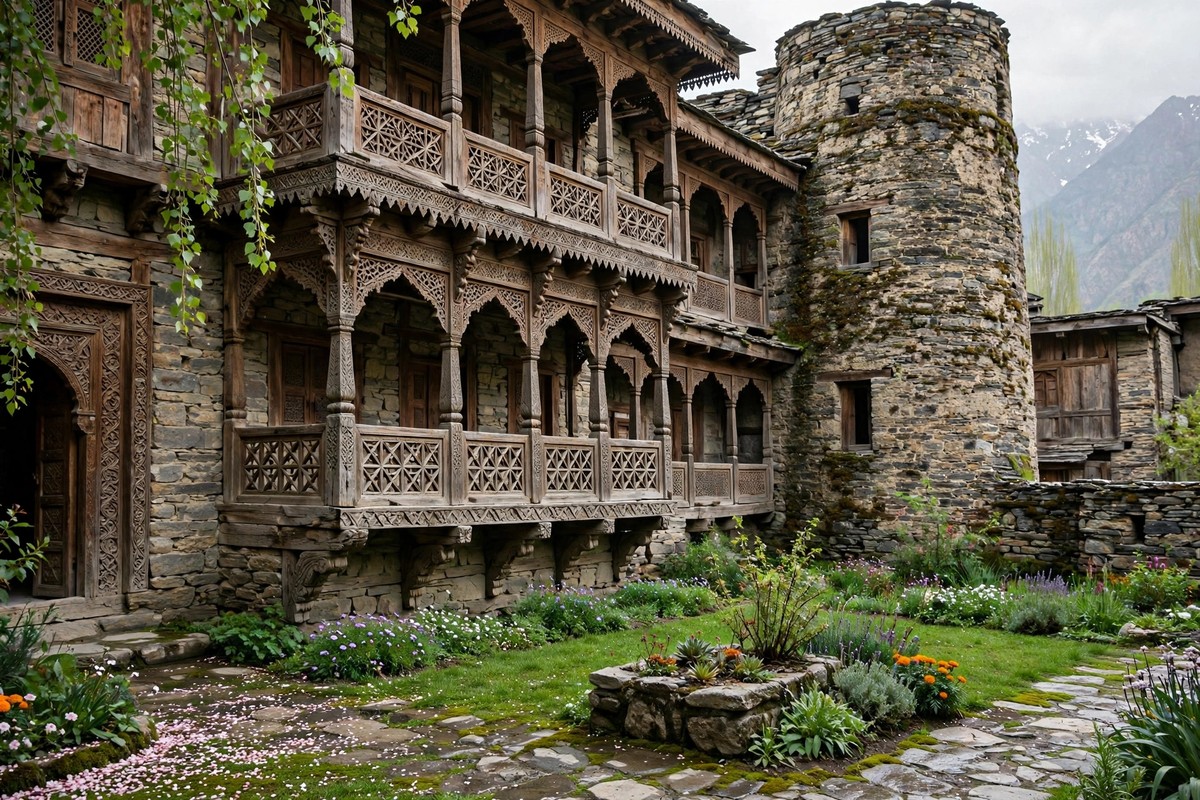

Scattered across the valleys of Gilgit-Baltistan, a chain of ancient forts tells the story of the region’s former princely states, their rivalries, and the trade routes that once linked the Karakoram with Central Asia, Tibet and Kashmir. Many have been beautifully restored — most famously by the Aga Khan Trust for Culture — and visiting them is the best way to understand the heritage of Hunza and Baltistan beyond the scenery.
The forts of Hunza
In Hunza, Baltit Fort towers over Karimabad: founded some 700 years ago and home to the Mirs of Hunza until 1945, it shows a strong Tibetan influence in its carved wooden balconies, and its award-winning restoration in the 1990s set the standard for heritage conservation in Pakistan. Older still is Altit Fort, around 900 years old, perched on a cliff high above the Hunza River, with a royal garden, a watchtower and one of the valley’s oldest settlements at its feet. The two forts are easily visited together in a single day from Karimabad.
The forts of Baltistan
In Baltistan, Shigar Fort — the “Fort on the Rock” — was built in the 17th century over a massive boulder in the Shigar Valley and today operates as the Serena Shigar Fort heritage hotel, with its museum rooms and audience halls open to visitors. Across in Skardu town, the ruined walls of Kharpocho Fort crown the great rock above the Indus; the short, steep hike to the top is rewarded with the finest view over Skardu town, the Indus plain and the surrounding peaks.
Khaplu Palace and the heritage route
Further east in Ghanche district stands the Khaplu Palace, built in 1840 by the Raja of Khaplu and now the Serena Khaplu Palace hotel. It blends Balti, Tibetan, Kashmiri and Ladakhi craftsmanship in its carved woodwork, painted ceilings and carved balconies, and anchors a village that also holds the 700-year-old Chaqchan Mosque, one of the oldest in the region. Taken together, these buildings trace a heritage route from Hunza through Skardu and Shigar to the far east of Baltistan that history lovers can follow over four to five unhurried days.
Practical tips: Most forts charge a modest entry fee and offer guided tours — take one, as the guides’ family stories and local legends bring the buildings alive. Combine Baltit and Altit in one day, allow half a day for Shigar Fort on a day trip from Skardu, and stop at Khaplu Palace on the way to or from the Hushe Valley. Wear comfortable shoes: expect steep village lanes, worn stone steps and low carved doorways throughout.
0 Comment