
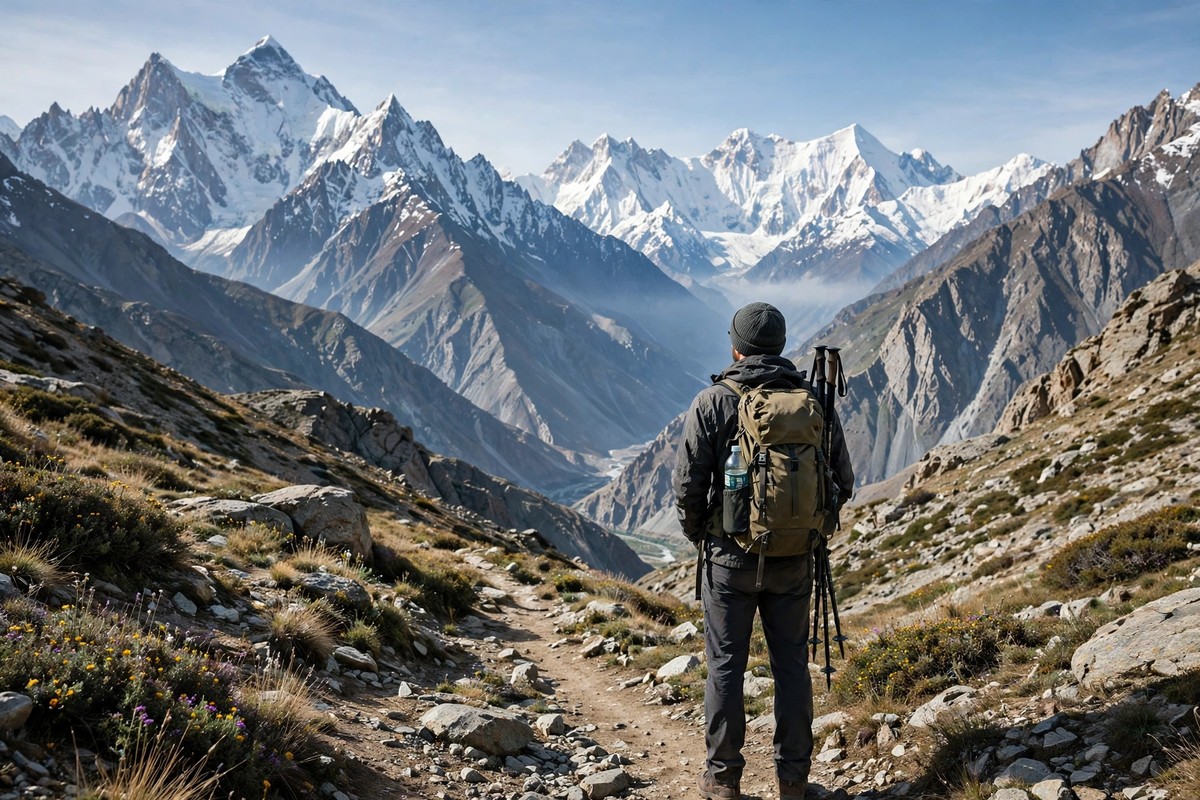

Packing for Gilgit-Baltistan is different from packing for anywhere else in Pakistan. In a single day you can drive from a warm valley floor at 1,500 metres to a viewpoint above 4,000 metres, and the sun that had you in a T-shirt at noon will have you reaching for a down jacket by sunset. The golden rule: pack layers, pack for four seasons, and keep everything you need for the day within reach — not buried in the boot.
Clothing: think in layers
Clothing — think in layers. Bring a moisture-wicking base layer, a warm fleece or insulated mid-layer, and a waterproof, windproof outer shell. Add a proper warm jacket (down or synthetic) even in summer for Deosai, Khunjerab and Fairy Meadows nights, plus a warm hat, gloves and a sun cap. Temperatures swing 15–20°C between day and night in the mountains, and winter travellers need thermal wear and a heavy coat. Modest, comfortable clothing is appreciated in villages and bazaars; women travellers will find a light shawl useful for village visits and mosques.
Footwear
Footwear matters more than fashion. Pack sturdy, broken-in walking shoes or light hiking boots with good grip — village paths, fort steps and meadow trails are uneven. Add comfortable sandals or trainers for evenings in town, and warm socks in quantity; cold feet end trips early. If you are trekking to Beyal Camp or Deosai, ankle support and waterproofing are worth the weight.
Protection from sun and altitude
Sun and altitude protection: at 2,500–4,700 metres the sun is fierce and the air is dry. Carry high-SPF sunscreen, lip balm, good sunglasses, and a reusable water bottle — stay hydrated to help with altitude. A small personal medical kit is essential: basics for headaches, stomach upsets and blisters, any personal medicines in hand luggage, and altitude-sickness advice from your doctor before you travel. Hand sanitiser, wet wipes and tissues are useful where facilities are basic.
Tech and documents: mobile coverage exists in towns but vanishes in valleys, so download offline maps, keep a power bank (10,000 mAh or more) and a torch or headlamp for villages with limited electricity. Carry your CNIC or passport at all times — checkpoints on the Karakoram Highway and Skardu Road register travellers — plus photocopies and photos of documents on your phone. Cash in Pakistani rupees is essential: cards work in some hotels, but jeeps, guides, porters and small shops are cash-only, and ATMs outside Gilgit and Skardu can be unreliable.
Finally, pack smart for the journey itself: a small daypack for daily essentials, a duffel or soft bag that loads easily into jeeps (hard suitcases are awkward on mountain roads), zip bags for dust and river crossings, and snacks for long drives. Pack light, pack warm, and leave a little space — you will want to bring home dried apricots, walnuts, honey and handicrafts from the bazaars of Hunza and Skardu.
0 Comment